How Bubble Tea Syrup Systems Support Scalable Operations
From Flavor Consistency to Operational Efficiency
As beverage businesses expand from single-store operations to multi-location brands, many begin to realize that consistency issues are often caused by the ingredient system and workflow behind the drinks, rather than the recipe itself.
Sweetness control in modern bubble tea operations is no longer just about flavor. It directly affects drink consistency, preparation workflow, and overall operational efficiency. Especially during peak hours or across multi-store operations, maintaining consistent quality while reducing preparation variables has become a critical factor for sustainable growth.
As a result, more beverage brands are adopting syrup systems to replace traditional cooked sugar or manual sugar preparation methods. Compared with granulated sugar, syrup systems make it easier to establish controlled sweetness levels and standardized beverage workflows, making them a preferred choice for modern chain stores and scalable beverage operations.
This article explores how syrup systems support workflow consistency, improve beverage preparation efficiency, and help bubble tea brands build scalable production systems.
Syrup Systems Are Becoming a Core Part of Modern Beverage Operations
As the global bubble tea market continues to grow, beverage brands are placing greater emphasis on workflow consistency and preparation efficiency.
From milk tea and fruit tea to sparkling beverages and functional drinks, beverage menus are becoming increasingly complex. As a result, ingredient compatibility and workflow stability are becoming more important than ever. Sweetness systems are no longer just flavor components — they are now a critical part of beverage production systems.
In addition to tea bases and dairy products, rapidly growing topping categories such as popping boba also rely heavily on stable ingredient systems.
👉 Related Reading: YUJIE FOOD’s Popping Boba Sparks a New Drink Trend
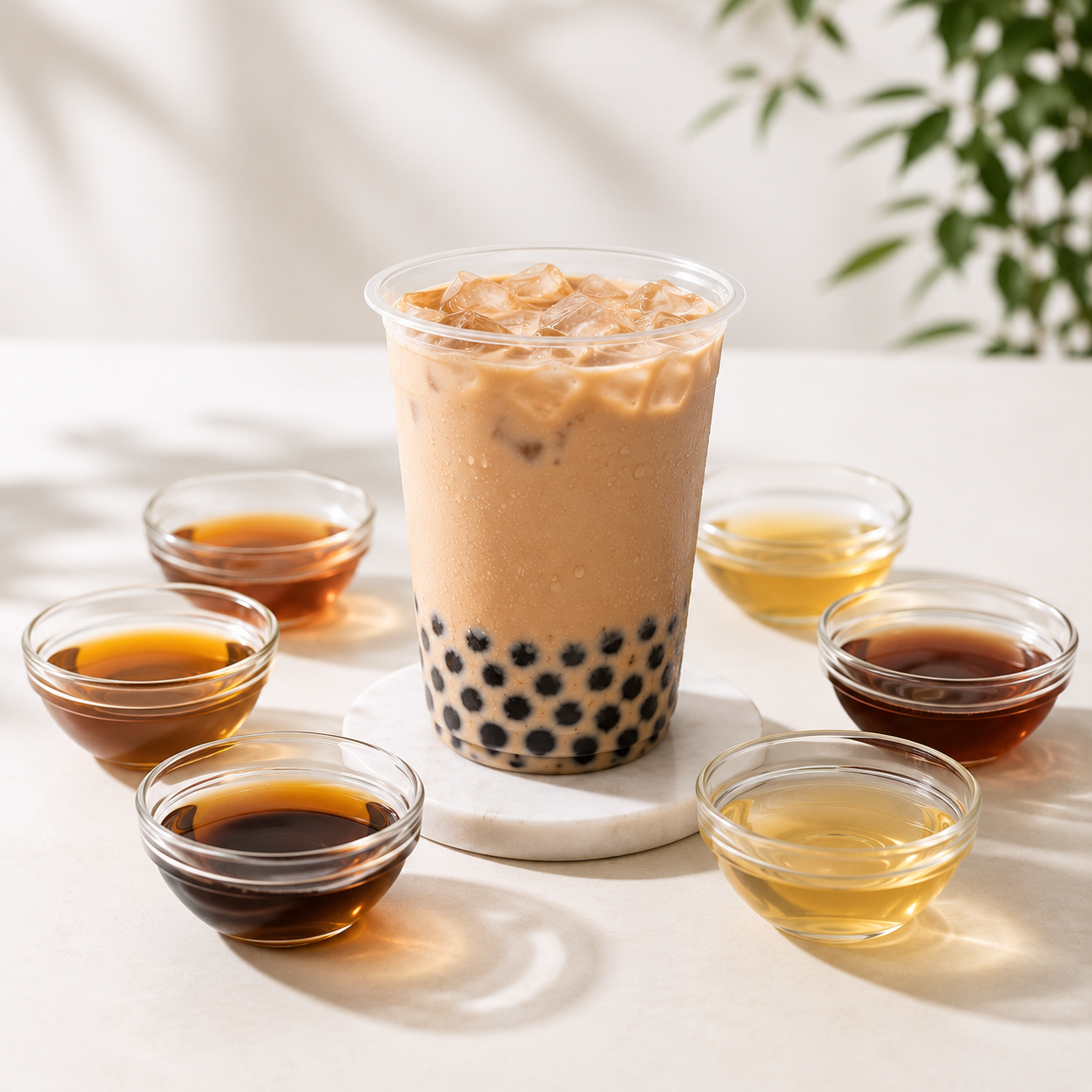
Different beverage brands also choose different syrup systems based on their product positioning and menu style. For example, pure cane sugar syrup is often used in tea-forward beverages, while golden brown sugar syrup is commonly applied in richer brown sugar drinks. Fruit and flavored syrups are frequently used for seasonal beverages and menu expansion.
Compared with restaurant models that rely heavily on on-site cooking, bubble tea businesses are easier to replicate across markets through centralized ingredient systems, standardized beverage workflows, and scalable production logic. This is one of the key reasons why the global bubble tea market continues to expand.
Compared with traditional sugar preparation methods, syrup systems typically provide:
More predictable flavor output
Smoother beverage preparation workflows
Reduced preparation errors
Better drink consistency across stores
Easier integration with equipment and beverage SOP systems
For chain stores and high-volume beverage operations, these factors are increasingly becoming operational necessities rather than optional advantages.
Syrup vs. Granulated Sugar in Real Beverage Operations
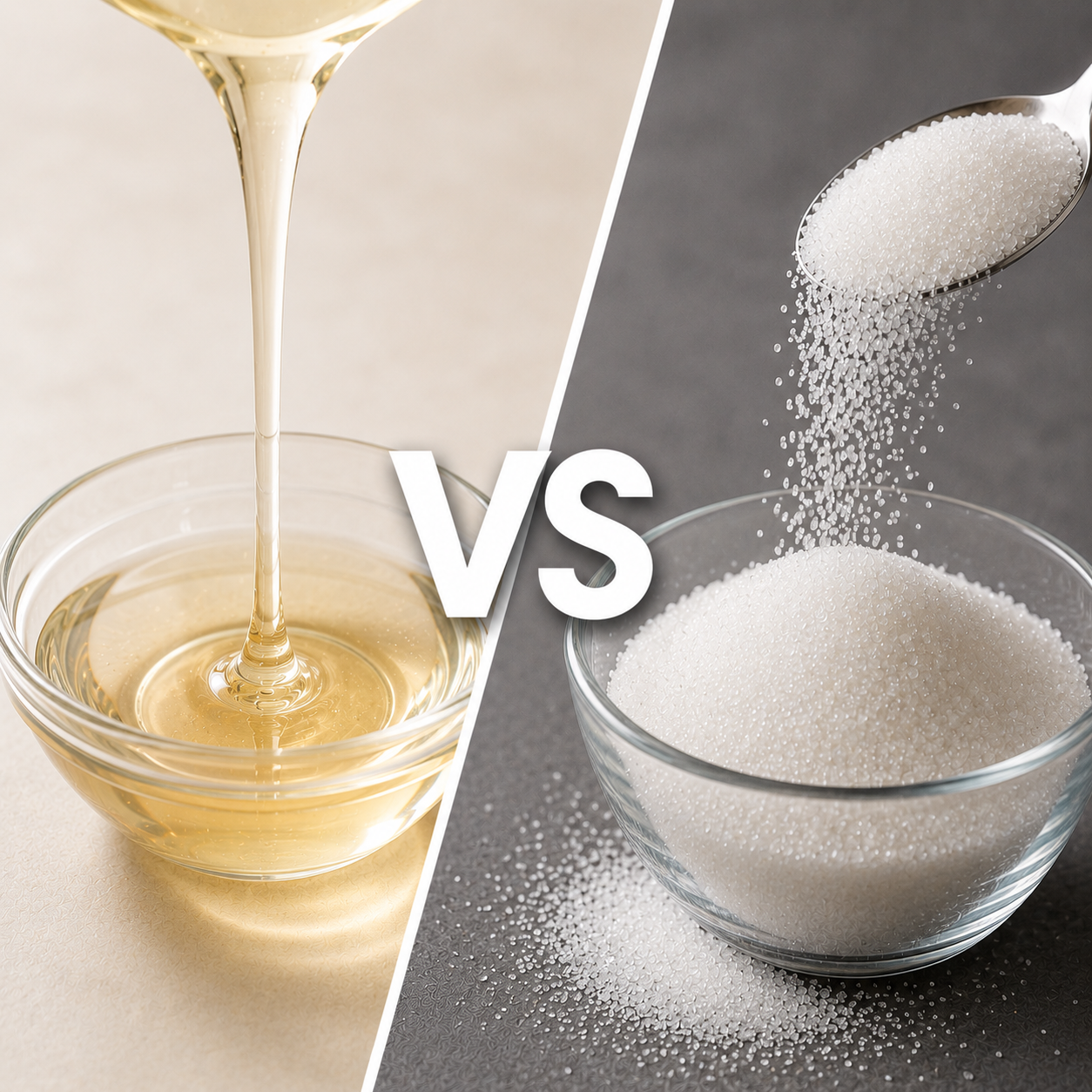
Many beverage brands begin with traditional sugar preparation methods. However, as businesses expand into multi-store operations, workflow inconsistencies often become more noticeable.
For example:
Sugar concentration may vary between stores
Staff may interpret sweetness levels differently
Mixing time may become inconsistent during peak hours
Undissolved sugar may affect mouthfeel and flavor
On-site sugar preparation increases labor demands
These issues may not seem significant in a single-store environment, but they can become operational challenges as brands scale.
Compared with manual sugar preparation, syrup systems reduce workflow variability and make it easier to maintain consistent beverage quality across multiple locations.
✔ More Consistent Flavor Performance
Because syrup is liquid-based, it blends quickly with tea bases and other ingredients, helping reduce sweetness inconsistencies and uneven texture caused by undissolved sugar.
For chain stores, maintaining consistent flavor output is essential to delivering a reliable customer experience.
✔ Reduced Pressure During Peak Hours
During high-traffic periods, preparation speed directly affects both customer satisfaction and store performance.
Compared with cooking sugar on-site, syrup systems simplify beverage preparation by reducing mixing time and workflow delays, helping stores maintain smoother operations during rush hours.
✔ Easier Workflow Standardization
With calibrated syrup ratios and dispensing systems, brands can control sweetness more precisely and reduce preparation differences between staff and store locations.
This is one reason why many beverage chains adopt syrup systems as part of their operational structure.
✔ Lower Dependence on Individual Staff Experience
Manual sugar preparation often depends heavily on employee habits and experience. Syrup systems reduce these preparation variables through fixed beverage workflows.
For growing beverage brands, this level of control becomes increasingly important.
Many beverage brands begin with traditional sugar preparation methods. However, as businesses expand into multi-store operations, workflow inconsistencies often become more noticeable.
For example:
Sugar concentration may vary between stores
Staff may interpret sweetness levels differently
Mixing time may become inconsistent during peak hours
Undissolved sugar may affect mouthfeel and flavor
On-site sugar preparation increases labor demands
These issues may not seem significant in a single-store environment, but they can become operational challenges as brands scale.
Compared with manual sugar preparation, syrup systems reduce workflow variability and make it easier to maintain consistent beverage quality across multiple locations.
Ingredient Systems Become More Important as Brands Scale
As beverage brands expand into multi-store operations, the key challenge is no longer simply whether a drink tastes good.
The real question becomes:
“Can this system be consistently replicated?”
As a result, more brands now treat syrup systems as part of a complete bubble tea production system rather than just another beverage ingredient.
Many brands establish standardized systems through:
Fixed sweetness calibration
Standardized beverage SOP workflows
Centralized ingredient supply systems
Syrup dispensing equipment integration
Cross-store workflow management systems
These operational structures help brands:
Reduce staff training time
Improve drink consistency across stores
Maintain flavor consistency
Reduce peak-hour operational pressure
Improve multi-store management efficiency
For expanding beverage businesses, ingredient stability and workflow scalability directly influence long-term operational performance.
👉 Related Reading: Custom Beverage Formulation & OEM Solutions
Real Beverage Shop Applications of Syrup Systems
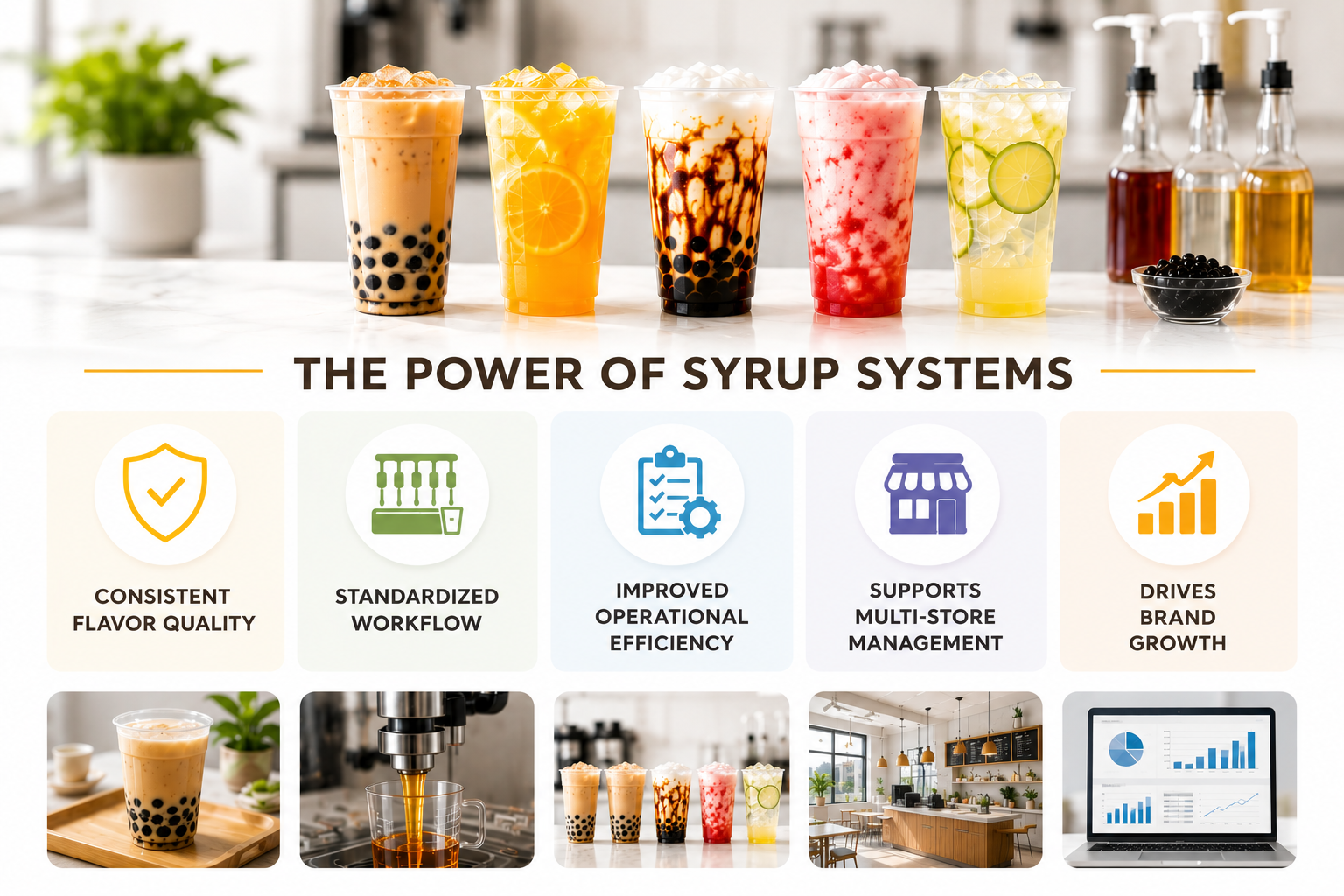
In day-to-day beverage shop operations, the advantages of syrup systems become even more apparent.
For high-volume beverage preparation, syrup systems help brands:
Improve beverage output speed during peak hours
Reduce staff training difficulty
Maintain consistent sweetness and flavor
Integrate more easily with syrup dispensers and beverage equipment
Improve workflow stability during rush periods
Syrup systems also simplify inventory management and ingredient control, helping reduce operational uncertainty.
Different syrup systems are also selected based on beverage applications. Pure cane sugar syrup is commonly used in tea-focused beverages, while golden brown sugar syrup is often used in brown sugar drinks with heavier sweetness profiles. Fruit and flavored syrups are more frequently used for seasonal beverages and menu innovation.
These syrup system choices influence not only flavor performance, but also workflow efficiency, ingredient management, and future menu flexibility.
The Operational Advantages of Yujie Food Syrup Systems
For modern beverage brands, a syrup supplier is no longer just an ingredient provider. It is an operational partner that directly affects product consistency and workflow efficiency.
For multi-store beverage operations and global market expansion, choosing a capable bubble tea syrup supplier can significantly influence long-term operational performance.
At Yujie Food, syrup development focuses not only on flavor, but also on operational compatibility and scalable beverage applications.
During product development, Yujie considers:
Compatibility with different beverage types
Workflow convenience during peak hours
Storage and transportation conditions across markets
Flavor consistency across multiple locations
Integration with beverage production systems and equipment
As a result, Yujie syrup systems help brands maintain stable beverage quality while supporting more efficient and standardized workflows.
✔ Stable Batch Consistency
Helps reduce flavor variation between production batches and supports more reliable beverage quality.
✔ Strong Application Compatibility
Works well with tea bases, dairy products, fruit flavors, and various toppings to improve overall beverage balance.
✔ Better Support for Multi-Store Operations
Stable syrup systems help brands maintain drink consistency across stores and simplify workflow management.
✔ Support for International Markets
Yujie Food maintains comprehensive quality management and production systems to support global beverage supply demands.
In addition to standard beverage syrup applications, Yujie Food also provides various syrup system solutions, including pure cane sugar syrup, golden brown sugar syrup, and flavored syrup applications to support different beverage concepts and market positioning.
For many beverage brands, selecting a syrup system is not simply about choosing an ingredient — it is about building a beverage operation system that is easier to manage and scale.
Syrup Systems Are Reshaping Modern Beverage Operations
As the bubble tea market continues to mature, competition is no longer focused only on launching new drinks.
Brands are increasingly competing on:
Product consistency
Workflow scalability
Store management efficiency
Stability during peak-hour service
Syrup systems are becoming one of the foundational elements that support these operational goals.
With a more structured syrup system, brands can reduce workflow variability while building beverage operations that are more suitable for long-term growth.
For growing beverage brands, ingredient systems are increasingly becoming part of long-term operational planning rather than simply a sourcing decision.
Yujie Food continues to support global beverage brands by focusing on scalable beverage applications, ingredient stability, and operational compatibility.
From beverage development to scalable operations, stable ingredient systems play an important role in long-term brand growth.
Contact Yujie Food to learn more about syrup applications, OEM integration, and global beverage supply solutions.